Johor Bahru vs Singapore: Cost of Living & Daily Commute Compared
A real comparison of living in Johor Bahru vs Singapore — rent, food, fuel and the daily border commute — with current 2026 numbers and the honest trade-offs.
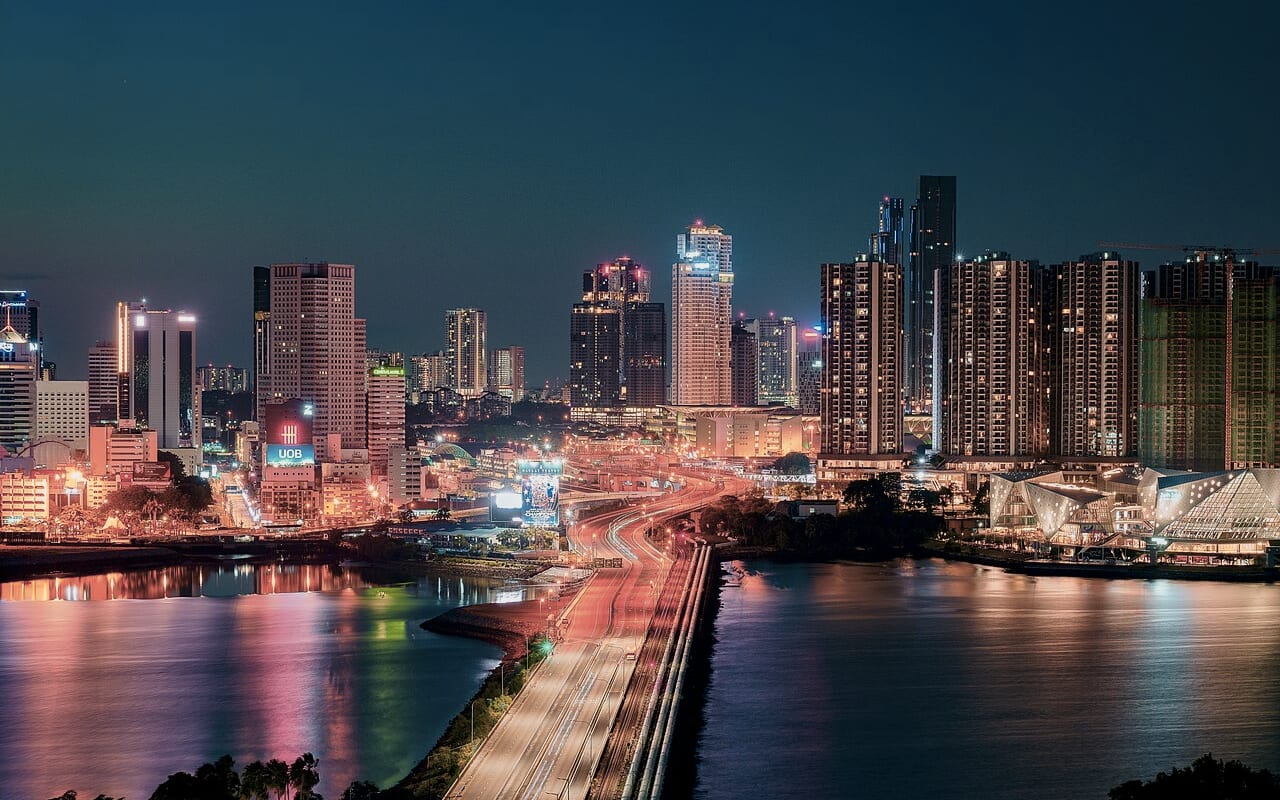
The question I get most from Singapore-based clients is some version of “If I move to JB, how much do I actually save — and what does it cost me in time?” Both halves matter. The money gap is real and large. The commute is where the savings get eaten back if you plan it badly. This guide puts current numbers on both sides so you can do the maths for your own situation.
If you’re weighing the move itself, read our Moving to Johor Bahru guide first, then come back here for the head-to-head.
The headline gap
Cross-border cost comparisons get thrown around loosely, so here’s a sourced frame. As of May 2026, Numbeo’s comparison shows you’d need roughly S$11,000–12,000 a month in Singapore to match a lifestyle that costs around RM10,000–11,000 in Johor Bahru — rent included. That’s not a rounding difference. It’s the single biggest reason the cross-border move keeps gaining traction.
Breaking it down by category (Numbeo / Expatistan, May 2026):
| Category | Singapore vs JB |
|---|---|
| Rent | ~87% higher in Singapore |
| Groceries | ~52% higher in Singapore |
| Restaurants / eating out | ~58–60% higher in Singapore |
| Overall (incl. rent) | Singapore roughly 2.5–3x JB |
Treat these as directional, not gospel — they shift with the exchange rate and with how you live. But the order of magnitude is consistent across every source I checked.
Rent: where the real money is
Rent is the category that moves the needle most. In Singapore, a modest condo unit easily runs S$3,000–5,000+ a month. In JB, that same budget is a different universe.
For a current JB frame from our own cost of living breakdown: a furnished two-bed condo in Bukit Indah runs about RM1,500–2,500, a one-to-two-bed in Danga Bay around RM1,300–2,000, and a CIQ-walkable city-centre studio about RM1,500–2,000. Convert RM2,000 and you’re at roughly S$590 a month for a furnished condo. That is the heart of the savings.
The trade-off is the deposit structure and the local rental rules, which work differently from Singapore — covered in renting in Johor Bahru. And where you rent depends heavily on whether you cross daily; see best areas to live in Johor Bahru.
Food: the everyday saving
This is the gap you feel three times a day. A hawker or kopitiam meal in JB runs about RM8–15; a fast-food combo around RM20. The same McDonald’s set that’s roughly S$10 in Singapore comes to about half that in JB. A cappuccino that’s S$6+ in Singapore is closer to S$4 here.
Groceries follow the same pattern — about half Singapore prices — with one caveat: imported and Western goods carry a real premium in JB, so if your basket is heavy on European cheese and imported cereal, the gap narrows. Eat and shop local and the saving is dramatic.
Fuel and cars
Fuel looks cheap in Malaysia until you read the fine print. Since the BUDI95 reform, subsidised RON95 at RM1.99 a litre is for Malaysian citizens only. As a foreigner you pump RON97, which is market-priced and floats weekly — around RM4.85–4.90 a litre as of late May 2026. Still cheaper than Singapore petrol, but not the headline number locals quote.
The bigger story is car ownership itself. Singapore’s COE system makes owning a car punishingly expensive; in Malaysia a financed car instalment commonly runs RM700–1,500+ a month with none of the COE burden. For many cross-border families, the car economics alone justify the move.
The commute — where savings get tested
Here’s the honest part. The cost gap is huge, but if you commute into Singapore daily, the border crossing is the tax you pay for it — in money and, more painfully, in time.
A daily driver faces: the VEP (Vehicle Entry Permit, mandatory and enforced since July 2025), Malaysia’s RM20 road charge per entry, Causeway tolls on both sides, and Singapore’s VEP daily fee. That Singapore fee is set to jump from S$35 to S$50 per car per day from 1 January 2027, with the free-day allowance removed — a material change if you drive in often. Full mechanics are in our border crossing guide.
But money isn’t the real cost. Time is. A bad peak-hour Causeway crossing can swallow one to two hours each way. Do that twice a day, five days a week, and the rent you saved starts looking expensive measured in your life.
This is exactly why the RTS Link matters so much. When it opens (targeted end-2026, with passenger service projected from early 2027 — details in our RTS Link guide), a Bukit Chagar–Woodlands North hop is about five minutes plus one immigration clearance. It changes the commute calculus completely — for people who live and work near the two stations.
So who actually comes out ahead?
The move clearly wins if any of these describe you:
- You work remotely or your income isn’t tied to being physically in Singapore daily — you capture the full cost gap with no commute tax.
- You’re retiring or semi-retired (see our MM2H guides) and crossing occasionally, not daily.
- You cross daily but live and work near the RTS endpoints, so the train removes the Causeway pain.
It’s a closer call — and you must run the time-and-toll maths honestly — if you’d be a daily peak-hour Causeway driver living far from Bukit Chagar. The rent savings are real, but a two-hour daily crossing is a genuine cost that doesn’t show up on Numbeo.
The bottom line
JB versus Singapore on pure cost isn’t close — JB wins decisively on rent, food and cars, with overall living costs roughly a third of Singapore’s. The variable that decides whether the move pays off for you is the commute. Get that right — remote work, occasional crossing, or living near the RTS Link — and you keep almost all of the saving. Get it wrong and you trade dollars for hours.
Want help running the numbers for your specific situation — where to live for your commute, what rent to budget? Get in touch. We answer real questions from real people making this move.
Sources (May 2026): Numbeo JB vs Singapore, Expatistan comparison.
About the author
Chris Tan lives and works in Johor Bahru, Malaysia, helping people relocate to and buy property in the Iskandar region. Questions about your move? Get in touch.
Keep reading
 Moving to Malaysia
 Best Areas to Live in Johor Bahru: A Neighbourhood Guide
Where to live in Johor Bahru — JB city, Bukit Indah, Iskandar Puteri, Mount Austin and more, compared by lifestyle, commute to Singapore, and who each suits.
7 Feb 2026
 Moving to Malaysia
 Cost of Living in Johor Bahru 2026: A Real Monthly Budget
What it actually costs to live in Johor Bahru each month — rent, utilities, food, transport — broken down for singles and couples. Real figures, dated.
4 Feb 2026
 Moving to Malaysia
 International Schools in Johor Bahru: A Parent's Guide
A practical guide to international schools in Johor Bahru & Iskandar — the real schools, curricula, honest 2026 fee ranges, EduCity, and the waitlist reality.
16 Feb 2026
 Moving to Malaysia
 Is Johor Bahru Safe? An Honest Look for Newcomers
Johor Bahru's safety reputation, examined honestly — what's overblown, what's real, the actual risks, and the common-sense precautions that matter.
17 Feb 2026
 Property & MM2H
 Buying Property in Iskandar Malaysia: A Foreigner's Guide (2026)
Can foreigners buy property in Johor? Yes — here's how it actually works in Iskandar Malaysia: rules, process, financing, fees, and the mistakes to avoid.
10 Feb 2026
 Travel & Explore
 Crossing the JB–Singapore Border: A Complete Guide
How to cross the Johor Bahru–Singapore border in 2026 — Causeway vs Second Link, VEP and road charges, QR/autogate clearance, peak times, and car vs bus vs motorcycle.
8 Mar 2026