Opening a Bank Account in Malaysia as a Foreigner
How a foreigner opens a Malaysian bank account in 2026 — which banks accept expats, the documents you need, minimum deposits, and getting DuitNow and online banking working.
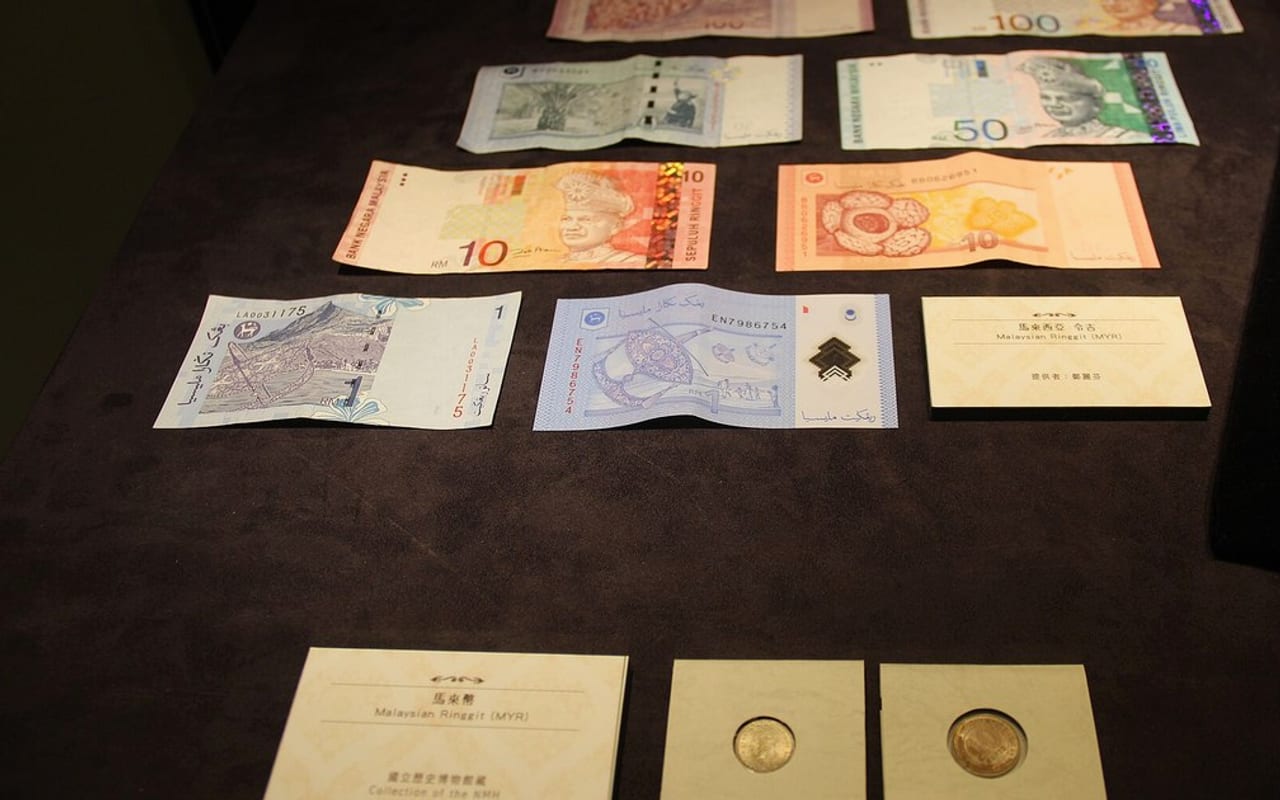
Almost everything in Malaysian daily life runs through a local bank account. Your salary, your rent, your utility bills, the QR code you scan at the kopitiam — all of it assumes you can move ringgit instantly through DuitNow. Without a local account you’re stuck paying foreign-card fees and you can’t use the payment rails everyone else takes for granted. The catch is that opening one as a foreigner is less predictable than back home, and the experience varies a lot by bank and even by branch. Here’s how it actually works in 2026.
Sorting out your local setup? Pair this with our guide to setting up utilities — many bill auto-payments need a local account first.
Can a foreigner even open an account?
Yes — but your visa status is the deciding factor, not your nationality.
- Tourists / social-visit pass — most banks will not open a standard account for you. A tourist visa is not accepted as proof of stay. Some private-banking or non-resident products exist, but they typically want a large balance and aren’t worth it for everyday use.
- Employment Pass, MM2H, student, dependent, or other long-stay pass — this is the normal route. Your visa is your proof that you actually live here, and that’s what the bank cares about.
The single biggest thing to understand: there is no nationwide “foreigner account” with fixed rules. Each bank sets its own policy, and front-line branch staff have real discretion. One branch may open your account in 40 minutes; another across town may turn you away or ask for an extra letter. This isn’t you doing something wrong — it’s just how it works here.
Which banks to try
The big local banks have the widest branch and ATM networks, which matters day to day:
- Maybank — Malaysia’s largest bank, the default for most people. As of May 2026, new customers (including foreigners) generally must open in person at a branch rather than fully online.
- CIMB — popular for a clean mobile app and quick onboarding.
- Public Bank and RHB — solid local options, also branch-based for foreigners.
If you have cross-border or multi-currency needs, the international banks are often more comfortable with non-resident paperwork:
- HSBC and Standard Chartered — more experience handling foreign applicants and multi-currency accounts, though they may expect a higher minimum balance.
My honest advice: don’t marry one bank before you walk in. Pick two candidates, call the branch nearest your home or office first to ask what they need from your specific visa type, then go to the one that sounds least painful. A branch that’s used to expats (common in KL and in JB near the Singapore commuter crowd) is worth a short detour.
Documents you’ll need
Bring originals plus a photocopy of each. A typical foreigner application asks for:
- Passport (original) — with your valid visa/pass page
- Your visa or pass — Employment Pass, MM2H, student pass, dependent pass, etc.
- Proof of Malaysian address — a tenancy agreement, a utility bill, or sometimes a letter
- Proof of employment or enrolment — an employer letter or offer letter for working expats; a university letter for students
- Sometimes a reference letter — from your employer or, occasionally, an existing account holder
Students often face an extra wrinkle: some banks want the university letter to specifically confirm your local address. Working expats usually have the smoothest time because the employer letter ties everything together.
Minimum deposit
You open the account with an initial deposit, and the amount depends on the bank and account type. As of May 2026, the range you’ll commonly see for foreigners is roughly RM250 to RM1,000 for a standard account, with some products (and the international banks) asking more.
For reference, CIMB’s regular current account for foreign residents has historically required around an RM1,000 opening deposit. Treat any figure here as a starting point — confirm the exact number with the branch on the day, because account products and minimums change.
Debit card, online banking and DuitNow
This is the part that makes the account actually useful:
- Debit card — you’ll usually get one on the spot or by mail within a couple of weeks. It works at ATMs and for card payments.
- Online / mobile banking — every major bank has an app (Maybank2u, CIMB Clicks/OCTO, etc.). Set this up before you leave the branch if you can; activating it later sometimes needs another visit.
- DuitNow — this is the one to understand. DuitNow is Malaysia’s national instant-transfer and QR standard, run by PayNet. Once you link your account, you can send money to anyone by their phone number or account, and pay almost any merchant by scanning a DuitNow QR code — from a mall outlet down to a roadside stall. There’s a combined daily limit (commonly up to RM50,000 across DuitNow, IBG and FPX) that you can adjust in-app.
Cash still works everywhere, but once DuitNow is live you’ll rarely carry much. It’s free or near-free for transfers, which is a genuine relief if you’re used to wire fees back home.
A realistic timeline
| Step | What happens | Rough time |
|---|---|---|
| Call the branch | Confirm documents for your visa type | Same day |
| Visit in person | Submit docs, sign, pay deposit | 30–90 min |
| Get debit card | On the spot or by mail | 0–2 weeks |
| Activate app + DuitNow | Set up online banking | Same day to a few days |
Process notes as of May 2026. Best case, you walk out the same day with a working account and card. Worst case, the branch wants one more document and you come back. Going in the morning, mid-week, beats the lunchtime and weekend crush.
Things that trip foreigners up
- Treating it as fully online. Most foreigner accounts still need an in-person branch visit for verification. Don’t book a fully-remote expectation.
- Walking in cold to a random branch. Call ahead. Five minutes on the phone saves a wasted trip.
- Forgetting proof of address. This is the document people most often arrive without. A signed tenancy agreement usually does it.
- Letting the account go dormant. If you barely use it, banks can flag it dormant and you’ll need to reactivate. Run a small DuitNow transfer now and then.
- Assuming every branch has the same rules. They don’t. If one says no, another may say yes.
Where to go next
A local account is usually the first admin task to clear once your visa is sorted, because so much else depends on it. From here, get your utilities connected and a local SIM card so the banking app can receive its OTP texts. If you’re still planning the move, start with the Johor Bahru relocation guide.
Hit a wall with a particular bank or branch in JB? Get in touch — we answer real questions from people setting up here.
About the author
Chris Tan lives and works in Johor Bahru, Malaysia, helping people relocate to and buy property in the Iskandar region. Questions about your move? Get in touch.
Keep reading
 Living Essentials
 Buying a Car in Malaysia: New, Used & Recon, Prices & Number Plates
Why cars cost so much in Malaysia, the difference between new, used and recon cars, and how the JPJ number-plate bidding (JPJeBid) actually works — a 2026 guide.
24 Feb 2026
 Living Essentials
 Driving in Malaysia: Licence, Buying a Car & Insurance
A foreigner's guide to driving in Malaysia in 2026 — using a foreign licence, converting it, buying a car, financing limits, road tax, insurance, and the RON97 fuel rule.
25 Feb 2026
 Living Essentials
 Healthcare in Malaysia for Expats & Newcomers
How healthcare works in Malaysia for expats — public vs private hospitals, real GP and specialist costs, insurance, and why Singaporeans cross to JB for care.
1 Mar 2026
 Living Essentials
 Income Tax in Malaysia for Foreigners & Residents
A plain-English guide to Malaysian income tax for foreigners — the 182-day residency rule, resident progressive rates, the flat 30% non-resident rate, MM2H, and filing.
27 Feb 2026
 Moving to Malaysia
 Best Areas to Live in Johor Bahru: A Neighbourhood Guide
Where to live in Johor Bahru — JB city, Bukit Indah, Iskandar Puteri, Mount Austin and more, compared by lifestyle, commute to Singapore, and who each suits.
7 Feb 2026
 Property & MM2H
 Buying Property in Iskandar Malaysia: A Foreigner's Guide (2026)
Can foreigners buy property in Johor? Yes — here's how it actually works in Iskandar Malaysia: rules, process, financing, fees, and the mistakes to avoid.
10 Feb 2026