Kuala Lumpur Desserts & Local Sweets
A local's guide to Kuala Lumpur desserts — cendol, ais kacang, tau fu fa, sago gula melaka and where to find them, with honest picks and rough 2026 prices.
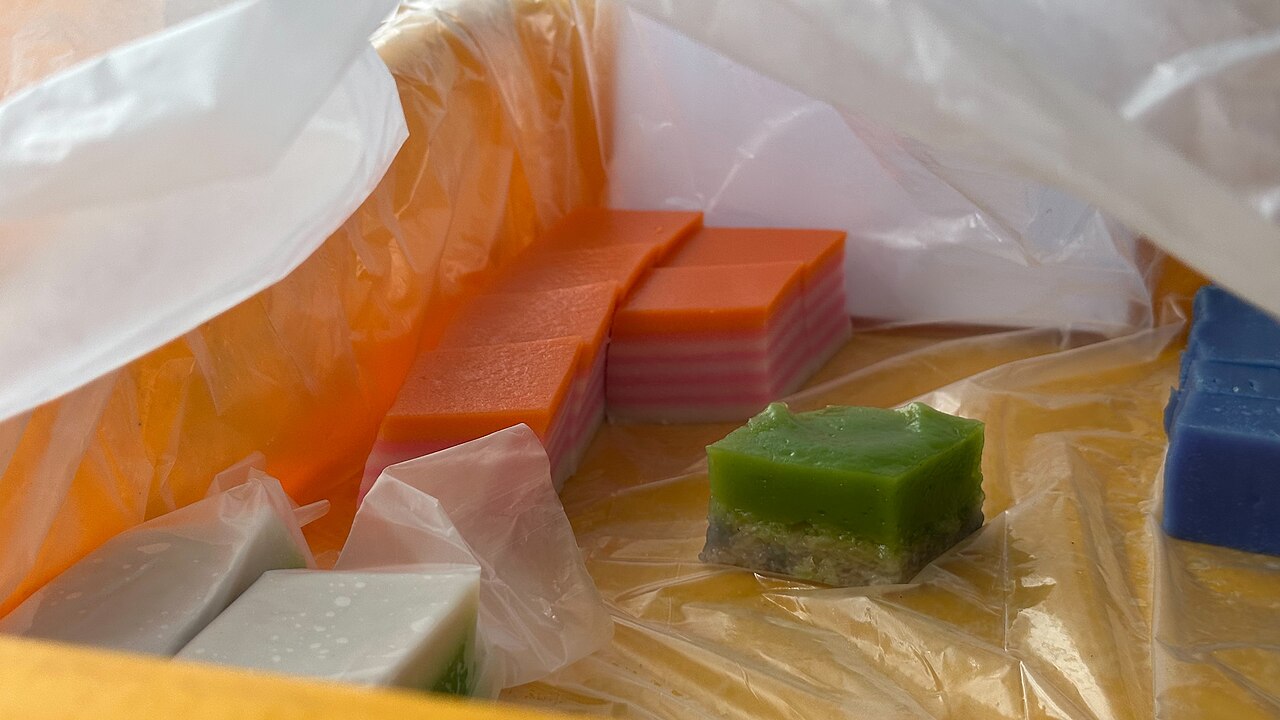
In a city this hot, dessert isn’t an afterthought — it’s a survival strategy. Kuala Lumpur’s sweets are built for the climate: mountains of shaved ice, coconut milk, palm sugar, soft tofu pudding, anything cold and sweet to take the edge off the afternoon. Most of it costs under RM10 and tastes far better than that. Here’s what to eat and where, as of 2026.
For the wider food scene, see our Kuala Lumpur explore guide and the KL street food hawker guide.
The icy ones (start here)
Cendol
The KL afternoon classic: shaved ice over coconut milk and gula melaka (palm sugar), with green rice-flour jelly noodles, often red beans too. The good versions are all about the gula melaka — dark, smoky, almost caramel. Pudu Market is a famous hunting ground, where queues form at the long-running cendol-and-rojak stalls. Around RM4–7 a bowl.
Ais kacang / ABC
Air Batu Campur, literally “mixed ice.” A heap of shaved ice over red beans, grass jelly, sweetcorn, attap seed and more, drenched in coloured syrups and evaporated milk, often crowned with a scoop of ice cream or a drizzle of gula melaka. Maximalist and glorious. You’ll find great versions in the Kepong area (the Kepong Baru food street is known for it) and at old-school spots around Petaling Street and Jalan Imbi. Around RM5–10 depending on toppings; add durian or ice cream and it climbs.
The warm and soft ones
Tau fu fa (beancurd pudding)
Silky soft tofu pudding, served warm with clear sugar syrup or gula melaka, sometimes ginger syrup in the morning. The modern stalls do flavours — pandan, sweetcorn, lychee — but the plain original is hard to beat. Look for it at morning markets and pasar malam (the Seputeh night market has a popular multi-flavour stall). Around RM3–6.
Sago gula melaka
Pearls of sago in coconut milk and palm sugar — simple, cooling, deeply satisfying. Old China Cafe on Jalan Balai Polis (in the Chinatown area) is well known for a classic version in a heritage setting. Around RM6–10.
Old China Cafe
- 🕐 Hours
- Daily 11am–10pm
- 📍 Address
- 11 Jalan Balai Polis, City Centre, 50000 Kuala Lumpur
The Malay kuih
Walk any morning market or pasar malam and you’ll hit a table of kuih — bite-sized traditional Malay and Nyonya cakes in every colour. A few worth grabbing:
- Kuih lapis — steamed rainbow layer cake you peel apart layer by layer.
- Onde-onde — pandan rice balls rolled in coconut with a molten gula melaka centre that bursts in your mouth.
- Seri muka — two layers, glutinous rice under a pandan custard.
- Kuih talam — a soft pandan-and-coconut steamed cake.
Most kuih run RM0.60–2 a piece, so you can build a whole sampler plate for a few ringgit. They’re a breakfast and tea-time thing more than a dessert, but no one’s stopping you.
The Indian and mamak sweets
KL’s Indian dessert game is strong, especially around Brickfields and at mamak spots citywide.
- Faluda — a tall glass of rose syrup, milk, basil seeds, jelly and ice cream. A meal in a cup. Around RM7–9.
- Mango lassi — yoghurt blended with mango, the perfect chilli-cooler after banana leaf rice.
- Gulab jamun and ladoo — the syrupy and ghee-rich Indian classics, sold at sweet shops in Brickfields.
Modern and fusion
KL’s cafe scene (covered in our best cafes guide) has pushed dessert in new directions — gula melaka tarts, durian cheesecakes, kaya-toast-flavoured everything. And in durian season (roughly mid-year), the city goes feral for it: durian stalls, durian cendol, durian ice cream, even durian buffets. If you can handle the smell, eat it where the locals do, by weight at a roadside stall — agree on the price before they crack it open.
Honest tips
- Eat cold desserts in the afternoon heat, around 2–5pm, when you most want them and the stalls are freshest.
- Gula melaka is the tell. For cendol and ais kacang, the quality of the palm sugar makes or breaks the whole bowl. The great stalls use the real, dark stuff.
- Markets beat malls for kuih. A morning market or pasar malam has fresher, cheaper, more varied kuih than any supermarket display.
- Durian is priced by weight. Confirm the price before they open it, every time.
- Cash for stalls. Dessert vendors at markets are often cash only; carry small notes.
What it costs, roughly
As of 2026, almost all of KL’s local desserts sit under RM10 — cendol and tau fu fa from RM3–7, ais kacang RM5–10, kuih under RM2 a piece, faluda RM7–9. You can sample your way through half a dozen sweets for less than the price of one Western dessert. It’s one of the genuine joys of eating here. See our Malaysia travel budget guide for the bigger picture.
A simple dessert plan
On a hot afternoon, get a bowl of cendol at Pudu Market, then wander a morning market or pasar malam and graze a plate of kuih — onde-onde first. After a banana leaf lunch in Brickfields, cool down with a faluda. And if it’s durian season and you’re brave, find a roadside stall and go for it. That’s KL dessert, top to bottom, for the price of a single cafe slice back home.
About the author
Chris Tan lives and works in Johor Bahru, Malaysia, helping people relocate to and buy property in the Iskandar region. Questions about your move? Get in touch.
Keep reading
 Travel & Explore
 Best Time to Visit Malaysia: Weather, Seasons & Crowds
When to visit Malaysia depends on where you go. A region-by-region guide to monsoons, haze, heat, school holidays and 2026 festival dates from someone who lives here.
2 Mar 2026
 Travel & Explore
 Crossing the JB–Singapore Border: A Complete Guide
How to cross the Johor Bahru–Singapore border in 2026 — Causeway vs Second Link, VEP and road charges, QR/autogate clearance, peak times, and car vs bus vs motorcycle.
8 Mar 2026
 Travel & Explore
 Bak Kut Teh in Johor Bahru: Where to Go
A local guide to bak kut teh in Johor Bahru — Shoon Huat, Hwa Mei, Kota Tinggi style, the difference between herbal and peppery broth, and rough 2026 prices.
6 Mar 2026
 Travel & Explore
 Beaches Near Johor Bahru
A local's guide to beaches near Johor Bahru — Desaru Coast, Tanjung Balau, Tanjung Piai and more, with drive times, rough 2026 costs and honest expectations.
11 Mar 2026
 Moving to Malaysia
 Best Areas to Live in Johor Bahru: A Neighbourhood Guide
Where to live in Johor Bahru — JB city, Bukit Indah, Iskandar Puteri, Mount Austin and more, compared by lifestyle, commute to Singapore, and who each suits.
7 Feb 2026
 Property & MM2H
 Buying Property in Iskandar Malaysia: A Foreigner's Guide (2026)
Can foreigners buy property in Johor? Yes — here's how it actually works in Iskandar Malaysia: rules, process, financing, fees, and the mistakes to avoid.
10 Feb 2026